
Creating an exceptional employee experience
People are the greatest asset of any organisation. To ensure that employees remain assets and do not become liabilities, managers must believe in the truth of this adage.
Today, more than ever, organisations need to take steps to promote the well-being of their employees. Recent events and current macroeconomic conditions are creating an environment that may be perceived as unstable or uncertain.
To drive an organisation forward in the face of these headwinds, employers need to focus on employee engagement to ensure that their best people don't seek other opportunities or leave the business. This strategy will not only serve existing staff. It will also help to attract and recruit the best talent.
There are direct links between an employee engagement strategy and organisational performance. Investing time and human resources in programming will promote a healthy corporate culture, employee performance and business results.
What is employee engagement?
According to Qualtrics, a leader in the field of experience management, employee engagement is defined as "the degree to which an employee is committed to helping their organisation achieve its goals. It is demonstrated by the way employees think, feel and act, as well as by the emotional connection employees feel towards their organisation, their work and their team".
The Society for Human Resource Management (SHRM) links it directly to business results: "Employee engagement has become a key driver of business success in today's competitive marketplace. High levels of engagement promote talent retention, encourage customer loyalty and improve organisational performance and stakeholder value".
It is imperative that employers proactively identify employee engagement strategies that can advance the value proposition for their workforce. Whether improving on the current situation or starting from scratch, designing the best employee engagement strategies for the organisation will deliver value.
Why employee engagement is essential in the workplace
Creating meaningful connections with one's job, one's team and the organisation as a whole is necessary for an employee to succeed at work. Whether it's a new employee, a junior member of staff, a divisional vice-president or a member of senior management, the whole team benefits from the organisation's efforts to boost workforce engagement.
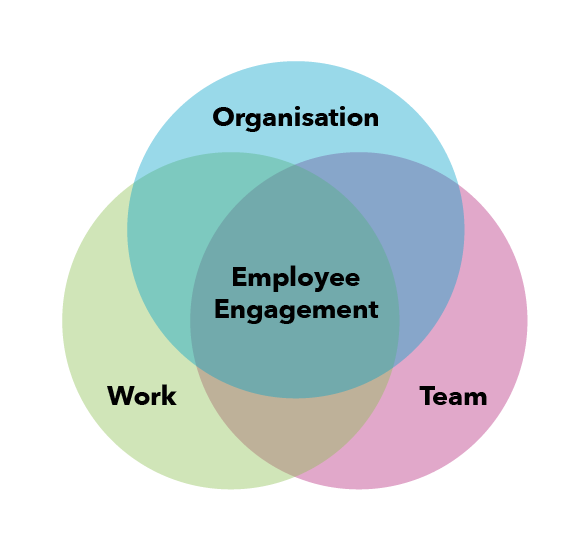
Engaged employees are committed to helping their employer achieve its objectives, actively decide to make a contribution and remain attached to the organisation. They are productive team members who also have an emotional connection with their work.
There are direct links between productivity and employee engagement. The Gallup study shows that highly engaged teams are 21% more productive than those who are disengaged.
In their study, Advanced Workplace Associates (AWA), in partnership with the Centre for Evidence-Based Management (CEBMa), identified six factors that have the greatest impact on the productivity of knowledge workers:
- Social cohesion
- Perceived hierarchical support
- Sharing information
- A shared vision, objectives and purpose
- External communication
- Trust
If an organisation's culture does not reflect these attributes, there is a risk that productivity and engagement will stagnate.
These six factors can serve as a roadmap for engaging employees in their work and in your organisation. When you design employee engagement strategies that align with these elements, you can inspire your staff and improve your business results.
There are also direct links between employee engagement and brand loyalty. As Simon Sinek once said, "Customers will never love a company unless employees love it first". Research over the years, including this recent study, shows a link between customer satisfaction and positive employee experience.
Engaged employees become brand ambassadors, quick to extol the virtues of your products and services to customers and prospects. Whether it's a first impression or one of many contact points, employees who care about your cause can influence sales as well as your net promoter score.
According to Willis Towers Watson, companies with high levels of employee engagement are twice as profitable as those with low levels
Other benefits of an engaged workforce
Human resources solutions provider Quantum Workplace is investigating employee engagement and its link to business success. It has identified 14 benefits that organisations can gain from a better employee experience:
- Improving safety in the workplace
- Improving employee health
- Happier employees
- Greater employee satisfaction
- Better living at home
- Reduced absenteeism
- A higher retention rate
- Greater employee loyalty
- Better customer service
- Best quality
- Greater productivity
- Increase in sales
- Greater profitability
- Higher share price
Most companies and their employees would welcome either of these results. These results confirm that investing in improved employee engagement contributes to the overall well-being and financial health of an organisation.
The difference between employee engagement and job satisfaction
It is common for the terms 'employee engagement' and 'job satisfaction' to be used synonymously. Although both are important and can contribute to staff retention, it is useful to distinguish between the two to ensure that your employee engagement strategy is delivering the desired results.
Job satisfaction can be defined as the feeling of satisfaction that one experiences directly when employed in a particular role. It is centred on contentment, unlike engagement, which is aligned with commitment and the emotional bond a person establishes with their work and the organisation.
Employee engagement is also linked to the employees themselves. Employees who are committed to their work must be intrinsically interested, motivated, passionate and invested. This type of team member will have a strong sense of purpose and will link their contributions to the success of the business.
Drivers of satisfaction include remuneration, recognition, benefits and work-life balance. While these elements are universally important to the majority of employees, the drivers of employee engagement include inspirational leadership, career development, communication and a healthy and diverse corporate culture. An engaged workforce is likely to increase job satisfaction.
Trends to be aware of
Employee engagement trends continue to evolve as global, political and environmental dynamics change.
From Gallup:
- In 2021, the commitment has fallen for the first time in over ten years.
- In the United States, commitment hovers around 32%. Worldwide, the percentage of engaged workers is 21%.
- The regions of Europe and North Africa have the lowest level of workers hired in November 2022.
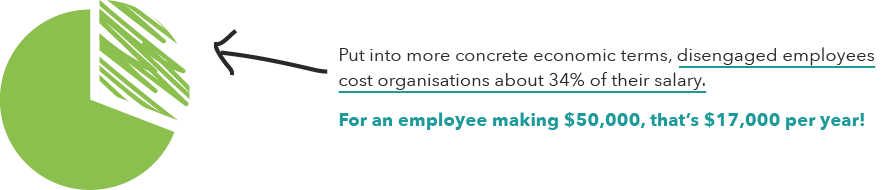
- Disengaged employees cost the world $7.8 trillion a year in lost productivity, equivalent to 11% of global gross domestic product.
From Quantum Workplace:
- 8 out of 10 employees said that when objectives and responsibilities are clear, employees are 2.8 times more likely to be highly committed.
- When employees see opportunities for professional development and career advancement in their company, they are 2.5 times more likely to be highly engaged than those who do not.
- When employees think they will be recognised, they are 2.7 times more likely to be highly committed.
- When employees feel that their workplace is conducive to their health and well-being, they are 3.5 times more likely to be highly engaged.
Behavioral Indicators
According to Gallup, "engaged employees are involved and enthusiastic about their work and their workplace. Actively disengaged employees are dissatisfied and disloyal because most of their workplace needs are not being met".
Actively disengaged employees, who make up at least half of the US workforce, have inspired the recent trend towards 'silent quitting', which is defined as 'doing the minimum required by one's job and devoting no more time, effort or enthusiasm to it than is absolutely necessary'.
To determine whether an employee is engaged or disengaged, you need to look at his or her behavioural tendencies:

Audit employee experience through an employee engagement survey
When an employer is ready to design and deploy an employee engagement strategy, a good first step is to take the pulse of the existing workforce. You need to know whether you have an engaged workforce or whether you are facing disengagement.
An employee engagement survey can be an effective way of assessing the current state of engagement. Asking for and being open to honest feedback can help team members feel valued, which is a first step towards high employee engagement.

Employee engagement surveys are data-driven and give employers a more objective view of what is happening within the organisation. Although there are standard questions that most companies would do well to ask, you need to tailor your assessments to your business. And while surveys should be standardised for all staff, the results will probably show that there is no one-size-fits-all solution to employee engagement.
You can conduct your audit through an annual employee engagement survey and use opinion polls to gather sentiment at times likely to have a greater impact on your workforce, such as a merger or acquisition, new funding for a business or a change in leadership. Then use the data to establish benchmarks and identify trends. It's also important that the results are communicated and shared.
The organisation's leaders and members of the HR team need to work together to design the employee engagement survey that will generate the most useful information for the business. The aim is to obtain information that can be used to engage employees. You can also use a professional services company that specialises in designing employee engagement surveys.
To ensure the focus is on obtaining engagement-specific feedback, you will need to design the survey to include the factors that generally support employee engagement with the organisation, including:
- Career growth and development
- Change management
- Communication
- Manager efficiency
- Team dynamics
- Confidence in leadership
- Individual needs
- Empowerment
- Future prospects
The best employee engagement strategies for your organisation
Thanks to the results of the audit, organisations are now in a position to draw up an employee engagement action plan. Companies that succeed in developing effective employee engagement strategies share four common practices. They are based on culture and values, adapt to flexible working environments, treat employees holistically and empower managers.
Another set of factors to consider are the attributes of employee productivity: social cohesion, perceived support from the hierarchy, information sharing, external communication, trust and the existence of a clear, shared vision, objectives and purpose. Using these pillars to guide your efforts to improve employee engagement will take you a long way.
One mindset that can help is to think of employees as customers. Companies are obsessed with discovering the characteristics, behaviours and buying habits of their customers. Customer loyalty is so important to many organisations that it is a function in its own right. If you're working hard to define and improve the customer experience, it could be beneficial to do the same for your staff.
Free e-book : Designing an employee-centred workplace
To create an optimal experience that engages employees, you need to ask yourself how the products and services your organisation offers them meet their needs. You can use the results of your employee engagement survey to understand what works and what doesn't work for them.
Look for indicators of the opportunities you can seize in the areas that matter to most employees, including company culture, benefits, personal development, career progression, workspace, remote environment, internal communication, company core values, employee appreciation, work-life balance and office perks.
It can be useful to pay particular attention to the responses of your most engaged employees to get some ideas on strategies to boost engagement and generate quick wins.
To ensure that the necessary time and attention is devoted to improving employee engagement, consider creating a cross-functional and geographically diverse team to support the efforts. An employee engagement committee is a strong signal that an organisation is committed to engaging its people. It puts employee engagement at the forefront of the company's culture and can motivate employees to discover new ways of contributing.
Encourage employees who are interested in employee engagement to be part of the team that will design strategies to create a positive emotional connection between the company and its people. The employee engagement committee should include senior executives, such as a vice-president or director, as well as junior employees. If you work in a virtual or hybrid environment, make sure you involve both on-site and remote workers. New employees can also be included, as they can share employee engagement strategies that have proven effective in other parts of the business.
The Employee Engagement Committee will work together to define the employee engagement strategy best suited to the organisation. Its role is also to equip managers with tools to increase employee engagement.
Managers and an effective employee engagement strategy
In almost every organisation, managers are the de facto champions of change. When you want to roll out new employee engagement strategies, you need to rely on line managers to ensure success.
Managers and the relationships they have with their direct reports are one of the key drivers of employee engagement. Udemy research found that almost half of employees surveyed had left their job because of their line manager, and almost two-thirds felt that their manager had not received adequate management training.
Human resources must invest time and energy in preparing managers for success. In a recent study, two out of three managers said they had received no training when they took up a management position. Interact found that 69% of managers are often uncomfortable communicating with employees. Communication between managers and employees is critical to success, as Gallup found that consistent communication is linked to greater engagement.
To support employee engagement, managers need to be trained in how to provide a quality service to employees. And they must be held accountable for the way they lead and support others.
It is also important to note that during the pandemic, the engagement of management employees, many of whom bore the brunt of the rapidly changing situation, also indicated that their own engagement was declining. This trend can be reversed through effective training and development.
Managers need to develop the strategic management skills that enable them to succeed. When team leaders are able to support their people and focus on what matters most to them, they become passionate about and actively involved in supporting the group.
For HR managers, providing an effective service to employees that improves engagement includes tactics such as:

An open-door policy
This practice allows an employee to feel that their manager is open to questions, complaints, suggestions and challenges. The aim is to encourage open communication, feedback and discussion of the employee's concerns. A successful open door policy can generate psychological security.

Setting clear expectations and objectives
Align employees' efforts around a goal and give meaning to their work. By communicating the link between their role and the organisation's vision and objectives, employees recognise that their impact goes beyond the tasks at hand. As Brene Brown once said, "to be clear is to be kind".

Creating opportunities for growth
To recognise high performance, managers can delegate responsibilities that will enable team members to gain new experience. Offer employees the opportunity to develop or refine their skills and knowledge by offering training programmes, attending conferences or participating in mentoring programmes.

Recognition
Celebrating achievements is an important part of the employee experience. Whether it's reaching milestones or succeeding in day-to-day work, showing appreciation for achievements can inspire strong, ongoing performance. Everyone has their own preferences about how they want to be recognised, so it's important to learn about the best way to recognise employees as individuals.

Defining professional mobility
Encourage employees to move from one role to another within your organisation, according to their interests and career goals. Offering professional development opportunities to move up the career ladder, from one department to another or even down to a position with less responsibility can boost employee motivation and retention. According to a LinkedIn study, 94% of employees say they would stay longer with a company that invests in their career development.

Taking an interest in employees' personal lives
Most adults spend a third of their lives at work, and the influence of what happens outside work cannot be ignored. Managers who take an active interest in the people they lead show that they are valued for who they are, which can go a long way to supporting the physical and mental health of team members. A global study funded by the World Economic Forum shows that when employees believe their employer cares about their well-being, they are eight times more likely to be engaged in their work.
FREE BOOK -- Thriving in uncertain times: Engaging employees during and after the pandemic
Measuring and maintaining optimal levels of employee engagement at work
Managing the right employee engagement strategies for your organisation is an ongoing process. To ensure that your efforts continue to inspire a more engaged workforce, you need to measure the impact of your employee engagement strategy.

Employee feedback will be an important indicator of whether your efforts are sustaining an increase or a decrease. To complement your annual employee engagement survey, opinion polls are an excellent option for tracking trends and progress throughout the year.
Use pulse surveys to track your Employee Net Promoter Score (eNPS). According to OfficeVibe, "eNPS is a simple way to measure loyalty and pride in your organisation. It measures employees' willingness to recommend your organisation as a good place to work, and whether they are engaged and enthusiastic about their work". The eNPS evolved from the Net Promoter System, which measures customer engagement.

Applying demographic data to the analysis can be useful. Examining data about people working in different locations or in a remote environment can reveal opportunities to influence company culture. An eNPS is an excellent way to determine whether employees working remotely have a different experience to those working in an office and how the company's core values may or may not be aligned with those of these populations.
Managers should be encouraged to share anecdotal feedback from employees that is also relevant to HR. Knowing that their contributions are being passed on and can influence positive change can help employees feel valued. It is also an indicator that employees are an important thread in the fabric of the company culture.
Other standard HR indicators, such as employee retention rates, staff turnover, absenteeism, return on investment in training, employee referrals and employee performance scores, can be useful to consider. Good upward and downward trends can be indicators of a successful employee engagement strategy.
When the right mix of activities has the desired impact on employees and engagement, the job isn't over because you'll always have new team members to attract, delight and retain.
Emergenetics and the employee engagement strategy
When employees are at the centre of an organisation's work culture, we believe the possibilities are endless. And when you know how your employees prefer to think and behave, you can create an inclusive and inspiring workplace that attracts, engages and retains the world's best talent.
The cornerstones of engagement are morale, teamwork and trust, which together drive productivity, performance and retention. Using Emergenetics enables employees to understand their inherent tendencies as well as the preferences of their colleagues. By celebrating cognitive diversity and honouring employees for exactly who they are, organisations create a solid foundation for their workforce.
Companies can work with Emergenetics or one of our certified resellers to access our exclusive, scientifically valid assessment, which measures seven universally applicable attributes.
The Emergenetics profile reveals a person's thinking and behavioural preferences. By understanding the Emergenetics attributes, individuals can improve their self-awareness, emotional intelligence, productivity and personal effectiveness. Our programmes, including our essential workshops, online self-study courses and state-of-the-art mobile app, help cultivate a sense of belonging in the workplace.
Organisations can build a team of Emergenetics experts and internal champions by inviting members of their Human Resources, Learning & Development or Organisational Development teams to become Certified Associates. Our Associates use Emergenetics to transform the way individuals, teams and organisations work.
Our two-day certification programme gives you the skills to facilitate Emergenetics programmes, integrate Emergenetics theory to enhance your talent development programmes, and use our science to strengthen leadership and management coaching.
Emergenetics International is a trusted partner in employee professional development for thousands of organisations around the world. Through our robust personality measurement tool and flagship programmes, we help companies, employees and teams discover their individual and collective strengths to overcome some of the biggest obstacles.
Organisations get a return on their investment in Emergenetics through :
- Reducing miscommunication and conflict
- Improved collaboration and productivity
- Increased employee engagement and retention

To find out more, visit our website or contact one of our team members!